
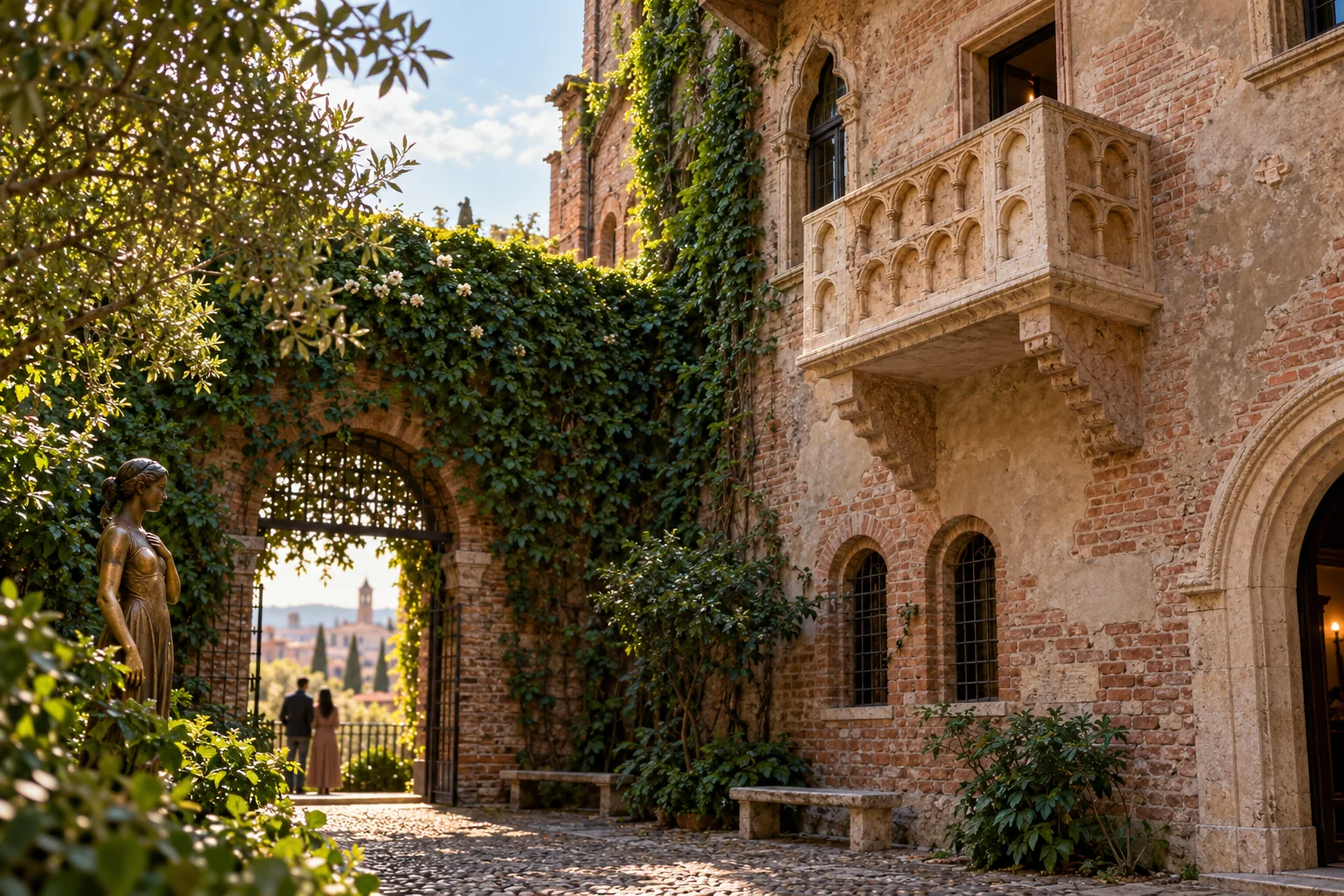
Romeo and Juliet are the most famous lovers associated with Verona, but their story did not begin with Shakespeare and is not a documented account of two real people. Earlier Italian narratives helped shape the tale before it became a world-famous tragedy.
A literary story with earlier roots
Before Shakespeare, Italian writers had already told stories of tragic young lovers. Luigi da Porto’s novella, written around 1530, gave the protagonists the names Romeo and Giulietta and placed the story in Verona.
From Luigi da Porto to Bandello and Shakespeare
Da Porto’s version drew on earlier literary traditions and was adapted by Matteo Bandello. The story then travelled through European retellings, including Arthur Brooke’s poem, before Shakespeare created the tragedy known today.
Is Verona really Romeo and Juliet’s city?
Verona is the setting of the literary story, but Romeo and Juliet are not a historically documented couple. Local families and places helped shape the tradition, while the famous plot belongs to literature.
Juliet’s House and places of memory
The building known as Juliet’s House is a historic site linked to the city’s literary memory. Visit it with realistic expectations, then continue through Piazza delle Erbe and the central streets that inspired generations of visitors.
A literary walk through the old town
Begin in Piazza Bra, continue to Juliet’s House, then walk to Piazza delle Erbe and the Scaliger Tombs. The route connects places associated with the story and works well with a guide to Verona’s historic centre.
Frequently asked questions
Were Romeo and Juliet real people?
They are literary characters. Verona is the setting and home of a long-running tradition, but the couple are not documented historical figures.
Who wrote the story before Shakespeare?
Luigi da Porto wrote an influential version around 1530; Matteo Bandello and other writers later adapted the tale.
Practical information
Prices
From 1 April 2026: €5 for Teatro Nuovo and courtyard; €12 for Teatro Nuovo, courtyard and Juliet’s House. Check official exemptions.
Opening hours
Monday 2:00–7:00 pm; Tuesday–Sunday 9:00 am–7:00 pm. Last slot 6:30 pm; closed 25 December and 1 January.
Official tickets and information
Online purchase and booking are required, including for free admission. Entrance is at Teatro Nuovo, Piazzetta Navona.
A local tip
Book first and go to the current entrance in Piazzetta Navona. Via Cappello is still worth a look, but it is no longer the visitor entrance.
Open the map
Open this map in Google Maps ↗Planning a stay in Verona? Browse our accommodation and send us your dates.
Explore apartmentsAsk about availability